Tao Tao walks into the room, eating a whole mango from a Tupperware box. It is five in the afternoon, and by his own account, it is one of the first things he has eaten all day. His spokesperson jokes that he shouldn’t have said that, because it’d be used as an opening for this piece. Tao doesn’t care; he has already finished the fruit.
As GetYourGuide’s chief operating officer, Tao runs the company’s day-to-day business, which means his days leave little time for meals. You might think that someone with his schedule would be restless. He isn’t, though he is fast: he answers every question the moment I finish asking it, without pausing to think, yet never seems in a hurry. Tao doesn’t check his phone during our interview, which runs close to 80 minutes. The display is deliberately placed face down on the table. He gives you what you ask for, and then waits to see what you’ll do with it.
What Tao has built in travel is easy to underestimate — it’s not the airplane and hotel reservations usually associated with the bulk of holiday spending, but the parts of the trip that people really remember. With GetYourGuide, you can skip the line at the Vatican, eat scorpions in Cambodia, or swim with sharks in Hawaii.
The company began in Zurich in 2009 as a student project with five founders who knew little about business or travel. In October 2025, the company said it had become profitable on an adjusted earnings before interest, taxes, depreciation, and amortisation basis, a common measure of performance, with revenue approaching €1bn over the previous 12 months. The company also reported a record 10m experiences booked in the three months through September 2025, with the value of those bookings up 30% on year.
There is no reason to think the growth can’t continue. Two out of every three trips are now booked online, but only one in three tours and attraction visits are reserved that way, according to research. Most travellers book their food tour or museum visit at a counter — if at all.
Never belonging to just one place
I’m meeting Tao at GetYourGuide's headquarters, housed in a former Ampere power station in Prenzlauer Berg. The company moved to Berlin in 2012. Once a working-class district of East Berlin, the neighbourhood is now one of the city’s trendiest and priciest, known for its hipster cafés. Next door is the conspicuous Mauerpark, once the deadly border zone between East and West Berlin. It is precisely the kind of place that GetYourGuide sells tours of.
At the gate, I am greeted by the most Ur-Berliner, a Berliner through and through, doorman I can imagine. He asks for my name and company, and when I tell him, he gets slightly annoyed, though not in an unpleasant way. “Can’t spell that; I’ll put ‘journalist’,” he says gruffly in that unmistakable dialect of someone who saw the Wall fall. He directs me to GetYourGuide’s reception, which is through the courtyard of the brick building from the 1920s. From then on, I will not hear another word of German in those walls. Tao and I are both native German speakers, but he requested to do the interview in English. It is a telling choice for a man who has lived in Beijing, Munich, Virginia, Zurich, Berlin, and, more recently, New York. Though he calls Germany home, Tao has never quite belonged to just one place. He has built a business around this feeling: that for an afternoon, you too, can belong somewhere else.
Gifted, but super lazy
The first place Tao belonged was Beijing, where he was born in 1985. He was raised by his grandparents there until he was almost six; his mother left for Germany to do a PhD when he was a baby.
After our interview, I called his mother to find out more. She describes those early years with a kind of gentle guilt. “In the beginning I wasn’t with him at all,” she says, “but I sent him fairy tales on cassette tapes. Hans Christian Andersen, the Brothers Grimm. I recorded them myself, in Chinese.” After some of the stories, she asked a question on the tape: “Tao, what do you think? Is it funny?” He would answer immediately, his grandparents told his mother: “Yes, Mama, I understood.”
By the time he arrived in Germany, he had started reading on his own. His first books were Mickey Mouse, often bought the day a new one came out. After primary school, at the Gymnasium, he got interested philosophy. Natural science didn’t interest him much. “He was interested in people, in management, in business,” his mother says. “He showed that from when he was small.”
The family moved around. They lived in Berlin-Friedenau, in social housing, then in a village near Frankfurt, because there was a particle accelerator, he says, with the excitement of a little boy. Then they moved to Munich after fourth grade. Tao describes his childhood as a good one.
His mother describes a boy who was always outside. He played table tennis, badminton, tennis and football, and his physical education teacher said he had a good feel for any ball. He did not enjoy hiking, his mother adds. It is, after all, the one activity you cannot win or lose at, I think to myself.
Tao was a regular at the dinner table when his mother cooked for friends and colleagues, though it wasn’t always his idea. There was no children’s table. “I always deliberately steered the conversation towards topics Tao could speak on, so he would join in and I could hear what he thought,” she says. “Every adult listened to what Tao had to say.”
Music was a different matter. He started on the accordion, which his mother chose, and switched to piano at twelve. His music teacher had a verdict, which his mother repeats with a laugh: “Gifted, but super lazy.” Tao, asked how his mother would describe him if she were in the room, gave the exact same answer.
His wife Marisa Wagner, a director at a communications consultancy, would later disagree vehemently. “He can immerse himself in a topic for weeks on end until he’s got to the bottom of it. Whether it’s migration policy, which headphones are best, or which restaurant has the best atmosphere,” she tells me on the phone. “Or he’ll stay up all night with Claude, vibecoding food websites or developing tools for financial analysis. This man is anything but lazy.”

Alas, Tao also says the phrase is less true now. “In business, there are constant nudges,” he says. “There is no time to be lazy.”
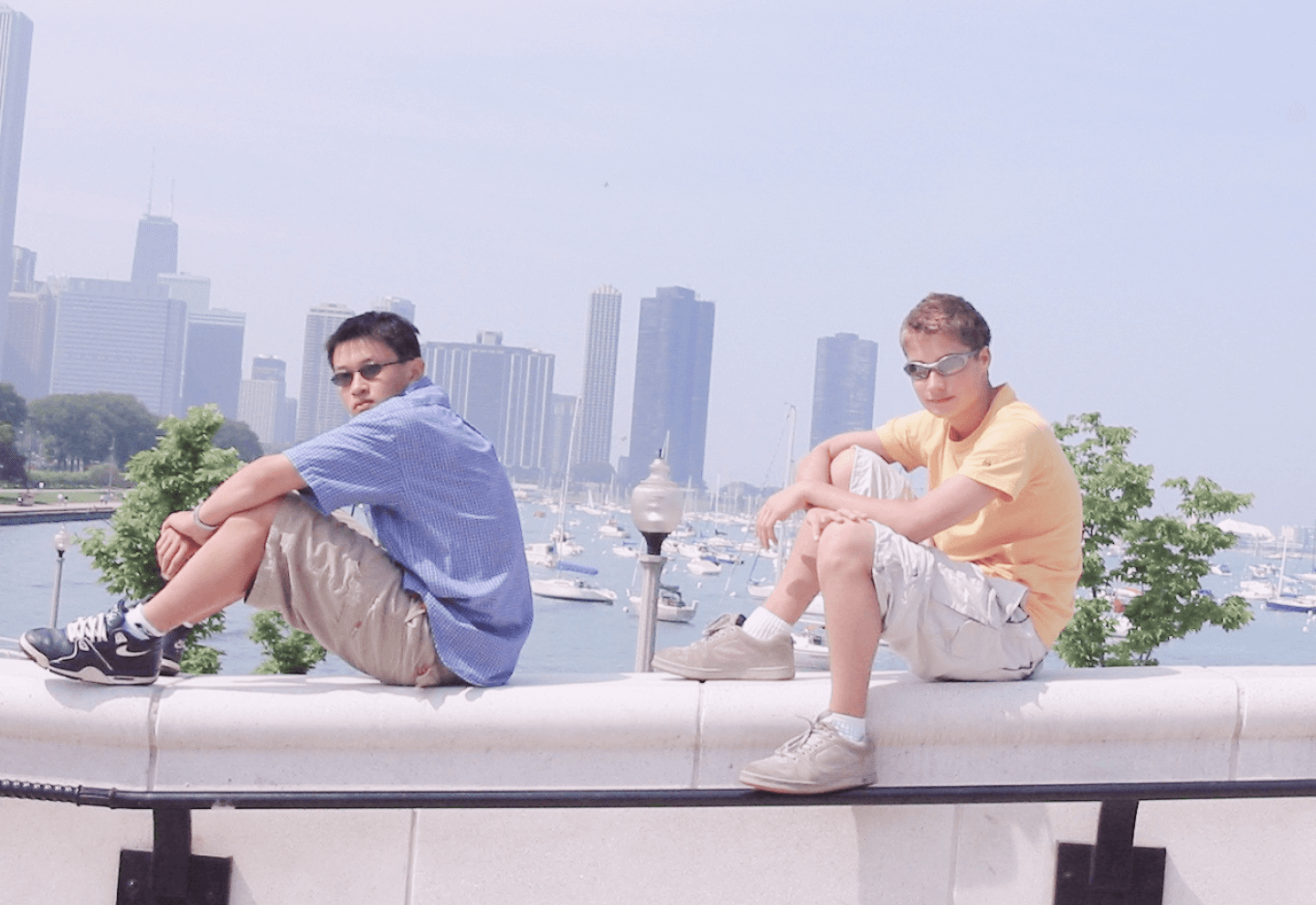
As a teenager, Tao spent a year in the United States because his mother wanted Tao’s English to improve. More important than the boost to his language skills, however, was his encounter with another German student and his future co-founder, Johannes Reck, at the high school in rural Virginia where he was studying. The two Germans have been close ever since.
“Even then, Tao was the one who knew where to go and what to do next”, Reck tells me, and adds: “He still is.” The common advice to never go into business with friends is something he’d never understood.
Two electrical engineers, two biochemists and a physicist build a company
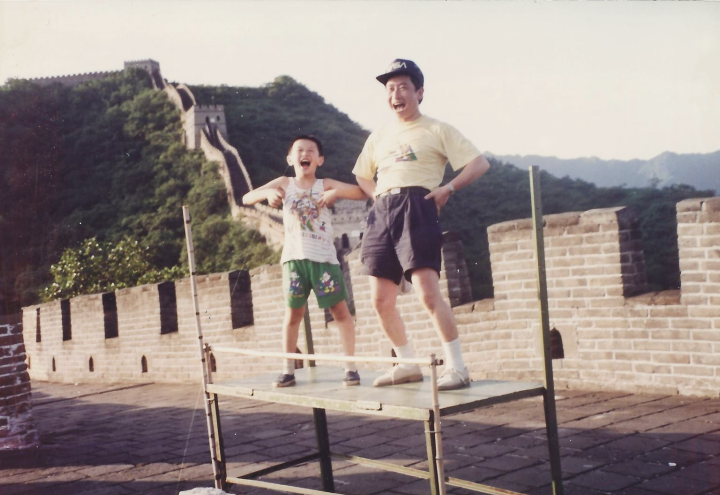
In 2007, Reck landed in Beijing for a student debate conference. He had no hotel Wi-Fi, no plan and no idea where to go. Tao arrived the next day and showed him the city. “Good food, good people, saw the Great Wall,” Tao says. The magical afternoon made the two young men wonder: “Why should a visitor wander a foreign city alone when a local could show them around?”
Later, at ETH Zurich, continental Europe’s best-ranked university, where Albert Einstein studied, Tao and Reck kept returning to the question from their 2007 trip. Tao was studying physics; Reck, biochemistry.
Their answer was to put travellers in touch with locals. Their first idea was a two-sided marketplace, a kind of Couchsurfing for tours, something Airbnb would later manage to pull off. Anyone could host, anyone could guide, anyone could be a customer. Students could show visitors around their own city, and tourists would get an insider’s view instead of a cookie-cutter tour. “Back then, we didn’t say peer-to-peer,” Tao says. “But that was the idea.”
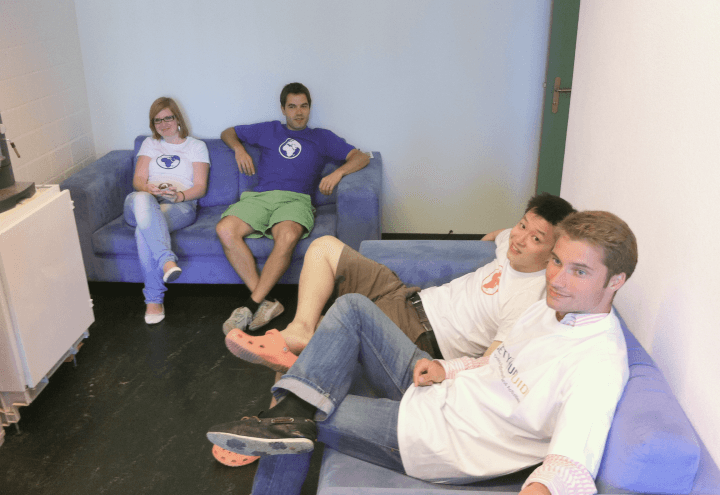
The five founders were two electrical engineers, two biochemists and a physicist, which sounds like the setup to a joke about them walking into a bar. The punchline is that they founded a tourism company. (Four are still with the company; one later became an investor.) None of them knew much about business or travel, and by Tao’s account, they did not research the market as thoroughly as they should have. They simply set about recruiting amateur guides.
“Here’s a chicken wing,” they told students in Beijing one summer, “if you sign up as a tour guide.” In Zurich, they ran a competition to find the country's best local guide, called the Tour de Swiss. They were not careful about copyright.
The competition attracted an unexpected applicant: a professional river-rafting company. The operator wrote to ask what the classified listing fee was, a question that the founders didn’t understand. Sleeping in hostels, spending what little money they had on bread and beer, the young founders had no concept of what a professional tour entailed, and had never thought that guides might pay to be found. It was the first sign that they had the wrong customer. “Our customer is not a 23-year-old college student,” Tao says.
The peer-to-peer idea did not take off, and Tao’s explanation is blunt. “You wouldn’t get your haircut from a random person. Why would you trust your most valuable holiday time to someone who isn’t a professional?”
The company was bootstrapped for several years. Early backing came from an angel who had run a travel business in Switzerland and from a small equity programme at Zurich Cantonal Bank. The first large round, of $14m, came in 2012. Some West Coast investors said they would back the company — if the founders moved to California. The founders declined that investment.
They did, however, move to Berlin. Tao argued that Europe was the main battleground for travel and that the cross-border, cross-language problem was best solved there. Berlin was the practical choice: its online marketing talent and comparatively low costs made it an easy place to build. The company opened its first American office, in Las Vegas, in 2012, but kept its base in Europe.
Europe is where travel lives
Tao has held the COO role for most of the company’s history. He describes it as four jobs: setting strategy, communicating it, overseeing execution and revising the plan when it fails. Overseeing execution means weekly reviews, hiring, performance management and settling interpersonal problems — are team members exceeding expectations or underperforming? It also means front-line work. Tao does customer service himself, talks to suppliers and sometimes shadows a member of staff. “I cannot do everybody’s job now,” he says. “But you can see where things actually break down.”
Some of his management style comes from family. As a university student, he spent time in Beijing working for his uncle, who had, his mother tells me proudly, built a consultancy company from nothing. She maintains that he learned a great deal there: how to handle staff, how to push a strategy through, and how the same situation can call for different responses in different places.
It helps, he says, that he and Reck can separate their roles. Reck, GetYourGuide’s chief executive officer, has the final say on paper, Tao says, but most executive- and board-level decisions are reached by consensus. “A true disagreement is quite rare,” he says, because most arguments are settled on the merits. “There are different hats: manager and employee, shareholder, friend. You have to be aware of which one you’re wearing.”
A quarter century after meeting, Reck still seems in awe of his co-founder: “He knows the best restaurant in any city, he’s somehow always hitting inbox zero, and, generally, he simplifies complex scenarios into clear decisions,” he tells me in a later email. “Tao cuts through the noise better and faster than anyone I know. That's a really rare gift.”
Tao, however, is candid about his own wiring. He calls himself structured. “Maybe I have a little bit of ADHD, so what are the next steps? It has to be very clear. Otherwise, I get nervous.”
Communication, he says, “was never terrible, but it definitely got better.” The harder part was connecting with people personally in meetings, not just sending information. “That’s the Champions League,” he says. “True presence. Everybody is still a work in progress.”
His mother is more complimentary of his interpersonal skills. “He has a feel for people. A real sensitivity for the person in front of him. That’s not common among managers, or among young people in Germany today.” She puts it down to his bicultural upbringing. “The good thing about growing up with two cultures is that you carry the best of both.”
I see influences from China and Germany, sure. His Chinese uncle showed him “how to handle stuff, how to push a strategy through,” Tao says. He’s also incredibly structured; otherwise he’d “get nervous”. But he also draws on his time in the US. He admires American can-do culture, and he says the US has a striking idea about citizenship: anyone can opt in to being American. He wishes Europe had something similar.
When it comes to travel, though, he is firmly European. “Europe is made for travel,” he says. “We have the great capitals of culture, and I can give you fifty cities in Europe that are worth visiting more than some American places.” The numbers are on his side. Of the roughly 1.5 billion international trips taken in 2025, more than half were in Europe, according to a United Nations tourism report.
His larger argument is about how Europeans travel. A French traveller goes to Italy. An Italian goes to Berlin. A German goes to Spain. Each short trip means a new language, sometimes a new currency, and a different set of cultural rules. Food-delivery and ride-hailing apps can expand one city at a time because their customers don’t move. “The city-by-city approach works if your market is city by city,” he says. “For us, it was always the French traveller going to Italy.” So from the start, GetYourGuide had to sell in many languages, and handle payments, customer service and inventory across borders. Not something that an American company that has grown large in one language can do.
But it’s not all sunshine and rainbows. The most popular European cities and destinations are increasingly charging visitors or keeping them out. Barcelona raised its tourist tax to €4 per person per night in 2024, and tourist apartments will be phased out by 2028. Venice charges day-trippers €5 to €10 on select days. Rome limits the Colosseum to 3,000 visitors at a time; Athens caps Acropolis visits at 20,000 daily. A platform that sends travellers to a popular attraction is part of the problem councils are trying to solve.
A GetYourGuide spokesperson tells me it seeks to help popular destinations “expand their visitable surface area” and spread visitors across places and seasons through partnerships with cities and local groups. In September 2025, it signed a two-year agreement with Florence’s tourism foundation, including the city. After removing alcohol tours from its Florence listings, GetYourGuide agreed to promote the city’s respectful-visiting campaign and share aggregated visitor data. In Barcelona, it partners with Amics de la Rambla on cultural tourism. The company’s October study claims its Spain bookings generated €12bn in economic activity and spread demand beyond major attractions. It says it does not respond to every regional policy move, preferring “the broader lens of responsible tourism.”
Meanwhile, Tao’s frying bigger fish. His stated goal is to make GetYourGuide a household brand for experiences. A few years ago, he says, experiences were an add-on after flights and hotels were booked. Now they can be the reason for the journey.
Tao says GetYourGuide has reached a point where it can operate without further outside investment. He dislikes the word “exit,” even after almost 20 years. “If it’s going well, why do you exit?” he asks. A public listing, he says, would be a milestone rather than a destination.
Berlin tech’s second chapter
GetYourGuide’s refusal to copy the Silicon Valley playbook places it in the second chapter of Berlin’s start-up story. The first chapter was the era of copies. In the 2000s, the entrepreneur Samwer brothers sold Jamba, their ringtone company, and used the proceeds to fund Rocket Internet. It became known as a “clone factory”, building local versions of Amazon, Uber and Airbnb. Its more durable successes were Zalando, the meal-kit company HelloFresh and the food-delivery group Delivery Hero. Rocket listed on the Frankfurt Stock Exchange in 2014, at a valuation of €6.7bn, the biggest European tech flotation in years. Within a year, it had lost 30% of its value, and in 2020 it delisted. For many Berliners, its story is a warning about buying growth.
What came after was different. Microsoft’s purchase of Wunderlist, a productivity app, for more than $100m in 2015 showed that Berlin companies could sell to global buyers. By 2016, the city was often ranked as Europe’s second-largest start-up hub after London.
GetYourGuide belongs to the second chapter, but not neatly. It was not built in a venture studio, and it did not clone an American model. It built for fragmented European conditions and was patient while other Berlin companies raced for scale. Tao still sees himself as a founder, though the company’s start-up days are long gone. “A founder is somebody who has a tonne of context,” he says. But a founder’s appetite for growth now has to coexist with responsibility. Operators depend on GetYourGuide for a large share of their income, employees rely on it and travellers trust it. “You cannot gamble with a business,” he says. “But the mindset is growth.”
He would step back only if he failed to do his job or lost motivation, and he shows no signs of either. “The market is massive,” he says. “It’s a once-in-a-lifetime opportunity to build a household brand.”
A duty to remain optimistic
When he and Reck decided to start a company, his parents did not try to stop them. “I knew it was risky,” his mother says. “We prepared for the worst case. The young ones should choose for themselves what they want. Many of them should try things and correct them themselves. It is their life. We parents are trying to understand it, and to support them as much as we can.”
From his mother, Tao learned to follow his own interests, rather than other people’s advice. He applies that rule to his politics too. He calls himself a liberal, and he draws on philosophers Karl Popper and John Rawls. He has no plan to run for office, but he takes part in public debate, and cares about what he calls“the conditions for prosperity and freedom”.
Before Germany’s federal election in 2021, Tao joined a group of individuals who pooled €500,000 for the Free Democrats (FDP), a liberal party advocating for lower taxes, less red tape, digitisation and free markets. The donation sparked sharp debate in the start-up scene, not least because Frank Thelen, a prominent investor and fellow donor, cast it as a way to keep the left out of power. Most donors stayed anonymous. Not Tao. “We wanted to put the ideas first,” he told me at the time. The FDP’s platform matched his priorities: cutting red tape, digitisation, and skilled immigration. The coalition the party joined went on to introduce Germany’s Opportunity Card, the Chancenkarte, a points-based visa that lets foreigners come to Germany to look for work.
When asked how he reconciles his constant optimism with his criticism of Germany and of his own business, he returns to Popper, who argued that because the future is not fixed, we have a duty to stay optimistic. Optimism is a state of mind and, for him, a moral obligation. He can list everything Germany does badly, and everything GetYourGuide could do better. The starting point, he says, has to be a belief that things can improve. “If you don’t believe you can improve it, then what’s the point?”
That is his argument about Europe, too. Founders here don’t need to copy Silicon Valley. They bring their own histories, languages and hard lessons, and can succeed on their own terms. The interview ends the way it began: quickly, politely and on time. Tao took as long as my questions needed, then left as the conversation wound down. It was close to half past six, and he seemingly had a desk or a dinner to get to.