The messages started when I reached 20,000 LinkedIn followers, a professional milestone I assume my parents had never, in their wildest dreams, believed their daughter would achieve. They all asked the same thing: did I do “brand collabs”?
My curiosity piqued, I replied to a few, and learned that if I played around with a new AI tool and wrote a post about my enthusiastic impressions, I could cover my mortgage every month.
The LinkedIn algorithm seemed to sense my new interest. Among the broetry and crying chief executives, a new kind of post began filling my timeline: a friendly-looking professional at a desk, offering to teach me how to spin up five agents at once. The secret was mine, if I commented “SHARE”.
Since ChatGPT arrived, creators have become one of the most important ways for fast-growing tech companies to sell software. The world of B2B, long the most boring corner of marketing, is borrowing the tricks of lip-gloss brands.
Some startups now spend 30-40% of their marketing budgets on creators, Jennifer Phan, the co-founder and chief executive of the creator marketing platform Passionfroot, estimates. One young London tech company, another marketer told me, has an eight-figure annual creator budget. AI presentation company Gamma credits creators as the top source of signups for its first $100m of annual recurring revenue, or 32% of total signups.
As my feed filled with these creators, whose content I genuinely enjoyed, I had more and more questions. What did a post cost? Was a video really converting users? I spoke to over a dozen creators, agents and the people at software companies who hire them. What emerged was a picture of a channel that venture-backed tech companies on both sides of the Atlantic now treat as essential. It also revealed a paradox: in the age of AI, the best way to sell software is through a human being.
The consumerisation of B2B
For most of its history, selling software to businesses has looked nothing like selling sunglasses or scarves. The goal was to get a small handful of people to sign a contract, not for millions of people to know about your product. The marketing arsenal was expense accounts, ads in trade magazines, white papers, strong analyst rankings from research firms like Gartner, and conferences (with the occasional celebrity guest sprinkled in).
Caution is part of what enterprise customers pay for. “Enterprise takes a very disciplined, measured, compliant approach, because it’s building on a heritage and that’s part of our value proposition,” says Alexandra Altholz, a vice-president at a Fortune Global 500 tech company who also advises startups. “Enterprise is dealing with customers’ systems and data, and if something’s not right, it’s potentially catastrophic.”
Social media, a playground for consumer brands, was an afterthought for B2B companies. It took a newer breed of venture-backed software companies to adopt the consumer playbook. Notion, the note-taker of choice for the productivity-pilled, is often cited as a pioneer.
Ben Lang, one of Notion’s earliest hires, was an independent superfan who ran a template site before joining the company. He started putting spend behind YouTubers a few months into the job, according to his blog. Notion then hired a head of influencer marketing from a skincare company; in 2023 Notion’s TikToks had surpassed a billion views.
Notion had an advantage. Its software didn’t require sign-off from a boss: people chose to use it themselves. Fans used it for their side projects or startups, brought it to work, and eventually their employers bought business subscriptions. That bottom-up route made creators a natural fit.
Not every buyer is won over this way. “With something like Notion or Granola, the employee might be able to start using it on their own and then say, ‘Hey, we should really get this approved,’” says Altholz. “As an enterprise buyer, that approach wouldn’t convert. But if I were advising a startup founder who needed agents built quickly, and that company was top of mind, I’d probably explore it.”
Generative AI poured fuel onto the fire for B2B creators by making software dramatically easier to build. The market is flooded with new products, many of which are tools in Notion’s mould: AI note-takers, dictation apps, presentation makers. They take seconds to set up and are easy to showcase with a 30-second clip that a younger consumer may see on TikTok. And they have subscription options for individuals and companies.
Companies growing fast need attention fast, and creators, who already have established audiences, are a shortcut. This generation of software businesses is also growing faster than their predecessors. AI app and website builder Lovable, for example, reached $100m in annual recurring revenue eight months after launch, making it, by its own measure, “the fastest-growing startup…in the world”.
Passionfroot’s Phan observes: “Especially for technical products, you need humans to tell the story.” She calls it “the consumerisation of B2B”: we now discover the tools we use at work the way we discover a new moisturiser, through someone we trust showing us how they use it.
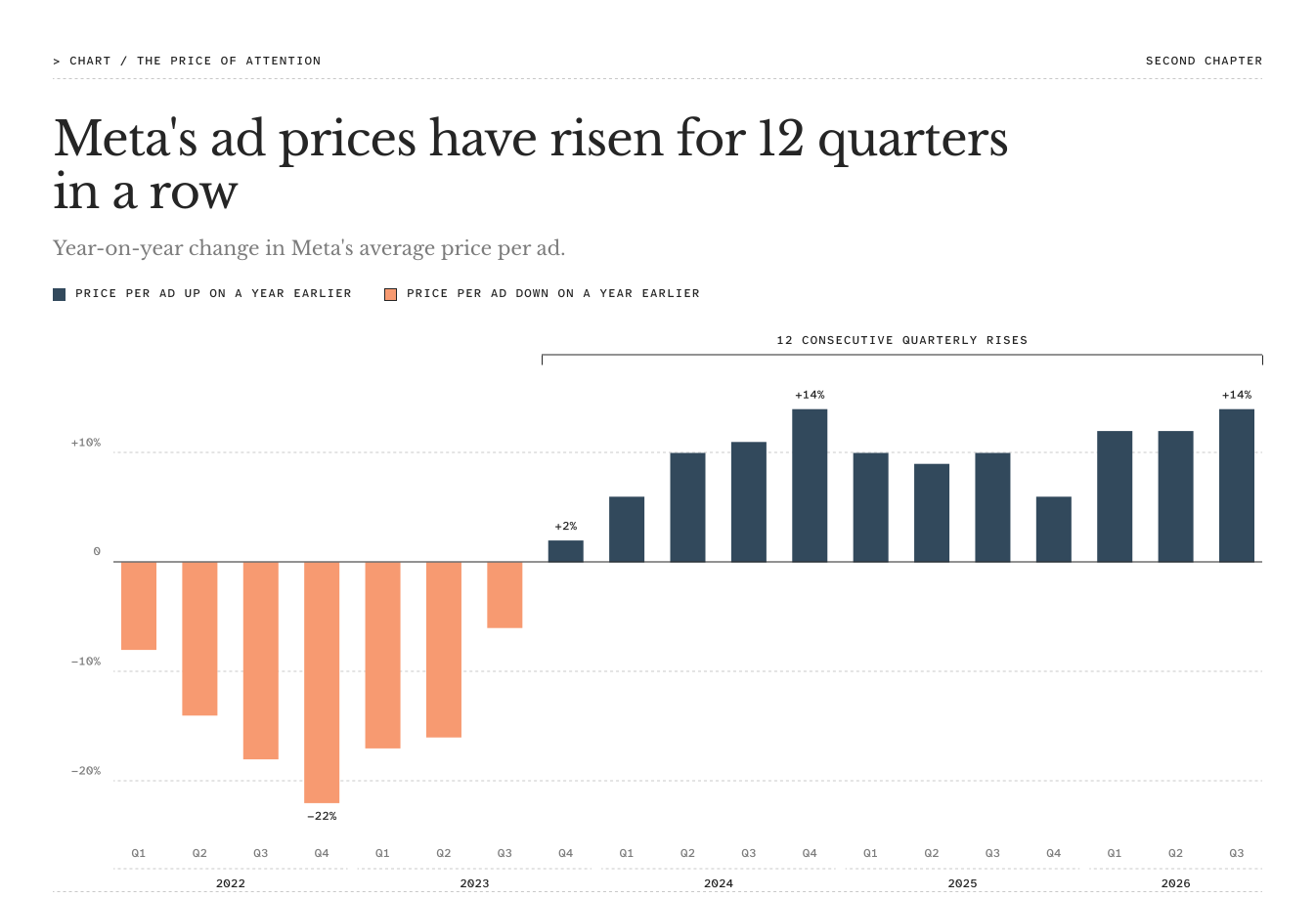
At the same time, AI is squeezing marketing from the other direction. Advertising is getting more expensive; Meta’s average price per ad has risen year on year for 12 consecutive quarters, according to the company’s quarterly filings. Several marketers I spoke with told me that AI companies are pushing the prices up. Meanwhile, traffic from search is falling off as people get answers from chatbots and summaries instead of clicking links.
All of this means that, for a growing number of software companies, an important route to customers’ hearts and wallets is through someone else’s feed. I started following more of these creators around 2024, when they started appearing not just on LinkedIn but on my Instagram too.
The ones that captivated me introduce new tools, but they also discuss burnout, the struggles of switching jobs, and how to get ahead. My favourite, Hannah Zhang, an MBA ex-banker living in New York City, talks a lot about “smart people”. In the glow of my smartphone at night, I watch another one of her reels and compare my career with the successful individuals she features. In the next post, in a partnership with Lovable, she shows me how to use the app builder to chart my future. I wonder: Am I one of the smart people yet?
Sad Pablo Escobar and five-figure months: how much B2B creators are paid
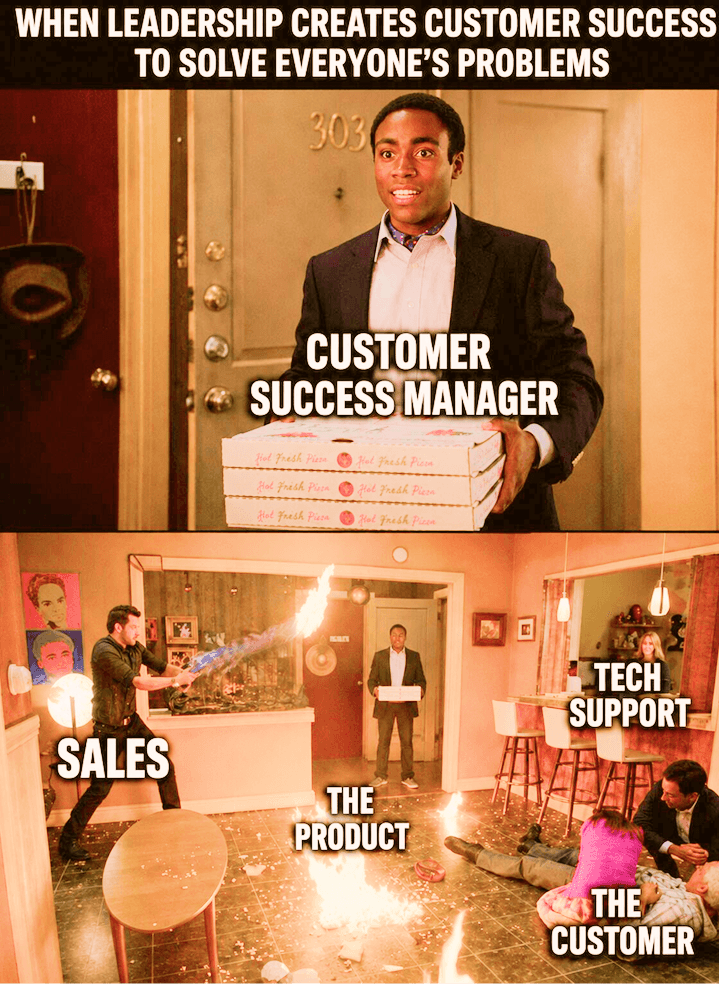
After a full day as an enterprise account executive and putting his son to bed, Kevin Meyer sits down at his laptop in Sitges, a small coastal town half an hour from Barcelona, and opens his library of memes. Donald Glover, arriving with pizza to a burning apartment in Community, becomes the customer success manager, hired to fix a mess that sales and the product have already set on fire. Sad Pablo Escobar, sitting alone on a swing, becomes a metaphor for the feeling when your pipeline is dead. Since he started posting in October 2022, these humorous works of art have gained him 61,000 followers on LinkedIn.
His first paid post, which came about six months after he started publishing, paid him $250. Since then, he has worked with companies such as HubSpot and Fiverr, and his earnings have paid for a family holiday, a new watch and a car for his partner.
“Sometimes a post takes me five to ten minutes, and I can charge $1,500 for it,” he says. “Then sometimes I reflect on how hard people work for $1,500 in Spain. It’s actually crazy.”
He posts five days a week, Monday to Friday, and has missed only a few days since he started posting in 2022. Even on the glamping holiday his LinkedIn money paid for, he spent his evenings on his laptop, drafting posts — not because anyone was forcing him, but because it allows him to open up his “creative side”. “For me, it’s not really working,” he says.
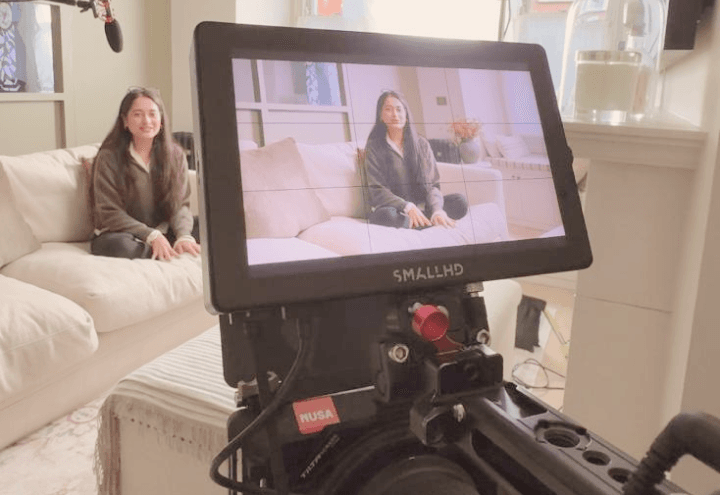
London-based creator Aditi Mishra, who posts about startups, tech and AI, says she's earned at least five figures in revenue each month since she started monetising her content, and that she is on track for a six-figure month. After posting for less than two years, she has roughly 240,000 followers on Instagram, 24,000 on LinkedIn, over 33,000 on Substack, and an American agency to negotiate partnerships.
Her first paid partnership was with Microsoft, which paid her a four-figure sum when she had less than 10,000 followers. Her audience of founders and mid-career to senior professionals, mostly women, treats her almost like an “elder sister”. I would imagine many others would be willing to expand their families in this way.
Most creators are paid flat fees for one post or a series, with rates for a single post ranging from a few hundred to a few thousand dollars. Kudos Narratives, a B2B influencer agency, calculated that in 2025 a LinkedIn post cost £840 on average from a creator with up to 50,000 followers, and £2,180 for one with 250,000 to 500,000. Above 500,000 followers, the price fell to £1,250. The largest accounts tend to have broader, less targeted audiences, while mid-sized creators with niche followings can charge more.
Alexis Jarre, the 24-year-old co-founder of Naano, a marketplace for creators and brands, learned the hard way why fixed pricing is the norm — performance-based arrangements can be manipulated. When Naano’s product launched in February, it paid creators €1.10 per click and grew fast, but customers started leaving. “We only attracted the worst creators because it was based on performance,” he says. Naano switched to flat fees.
Many creators also sign multi-month retainers with companies for a set number of posts a month. Meyer says he pushes brands for longer deals, such as six months, because “it’s not always in our hands how the posts perform”. Over a longer timeframe, “usually I can guarantee you that I will generate a viral post for you.”
Tracking the impact of creator content
The money is real, and so is the effort. What was less clear to me is what brands are getting for it. I don’t scroll on Instagram expecting to sign up for a demo of a new podcast editing software. Even when a clever workflow catches my eye, if the next post is about a new London restaurant opening or my friend’s promotion, I’ve moved on.
Lamia Alonso, who runs affiliate and influencer partnerships at lemlist, a French company that sells cold-outreach software, admits it’s hard to measure the impact, compared with consumer marketing. In B2B, “people need a lot of touchpoints before they actually make a purchase”: a post, an ad, a colleague’s recommendation, then a meeting with their head of sales and revenue operations. A creator video can be one of those touchpoints, nudging them towards a purchase.
She worked with about 20 creators when she joined in January, and now manages between 50 and 70, mostly on LinkedIn; creators take “a big chunk” of the marketing budget.
Lamia’s solution is to score every creator post against a grid of seven criteria, including whether it fits lemlist’s target customer and whether the voice is authentic. If a post scores over 90%, she waits a week or so, sees who viewed it, then pays LinkedIn to show it to more people like them. “If I need reach, I buy it. But I buy it on proper content.”
Abbie Lane, who runs the creator programme at VEED, a London AI video-editing company, says another benefit of creator marketing is its “knock-on effect” on other marketing channels. She says that creators reach a “slightly colder audience”, which they prime for paid ads, helping bring down how much it costs to acquire a customer with those ads.
Other companies, such as Gamma, ask users where they learned about the product during onboarding, and track which users cite creators.
The bigger headache is LinkedIn itself. At NordVPN, Lamia worked mostly on YouTube, where a video keeps finding viewers for years. On LinkedIn, a post sinks into the digital quicksand within days. And the rules keep changing: one week video gets reach, the next it’s carousels. “It’s frustrating for me, but it’s even more frustrating for my creators, because they put effort in,” she says.
Selling trust
As well as a dance with the algorithm, each one of these partnerships is also a dance of trust. A few months ago, I was approached by a company about a partnership. When I mentioned the deal to an engineer friend, he said I was right to turn it down: the company’s tool, he said, had many well-known security vulnerabilities. Had I taken the money and someone’s data had been exposed, would I have shared the blame?
“It’s easier to get away with a bad lipstick recommendation,” says Mishra. “It’s significantly harder to get away with a bad laptop recommendation.” So knowledge creators, she says, have to be “even more picky about the kind of companies that we partner with”.
Lane at VEED says she appreciates discriminating creators. If they trial the product and turn her down because VEED isn’t right, it shows they know their audience, she says. Her advice to creators: be authentic, and only accept collaborations that “make sense” for you.
Aneta Kmiecik, an architect turned user experience designer, says she treads carefully when talking about AI to an audience of designers worried about their jobs. She is also careful to be transparent about which tools brands give her for free, ever since a follower added up the cost of the AI tools in one of her workflows and found it came to about $1,000.
Even for savvy viewers, it can be hard to tell the difference between a fan enthusing about software they love and someone being paid. On LinkedIn and Instagram, paid posts can be labelled as brand partnerships, but sometimes are only flagged by a hashtag buried at the bottom of the caption.
Tech companies working with creators also need to be wary. Marketers tell me they check if creators’ followers are real and not bots. Agencies also help companies watch for red flags in creator content — racist videos or a paid promotion with a competitor.
Creator burnout
Keeping trust, post after post, takes work, and the work keeps getting harder. Alongside the promotions, these creators are the unofficial training department for the AI-native workforce. They show their followers how to use new features and share workflows.
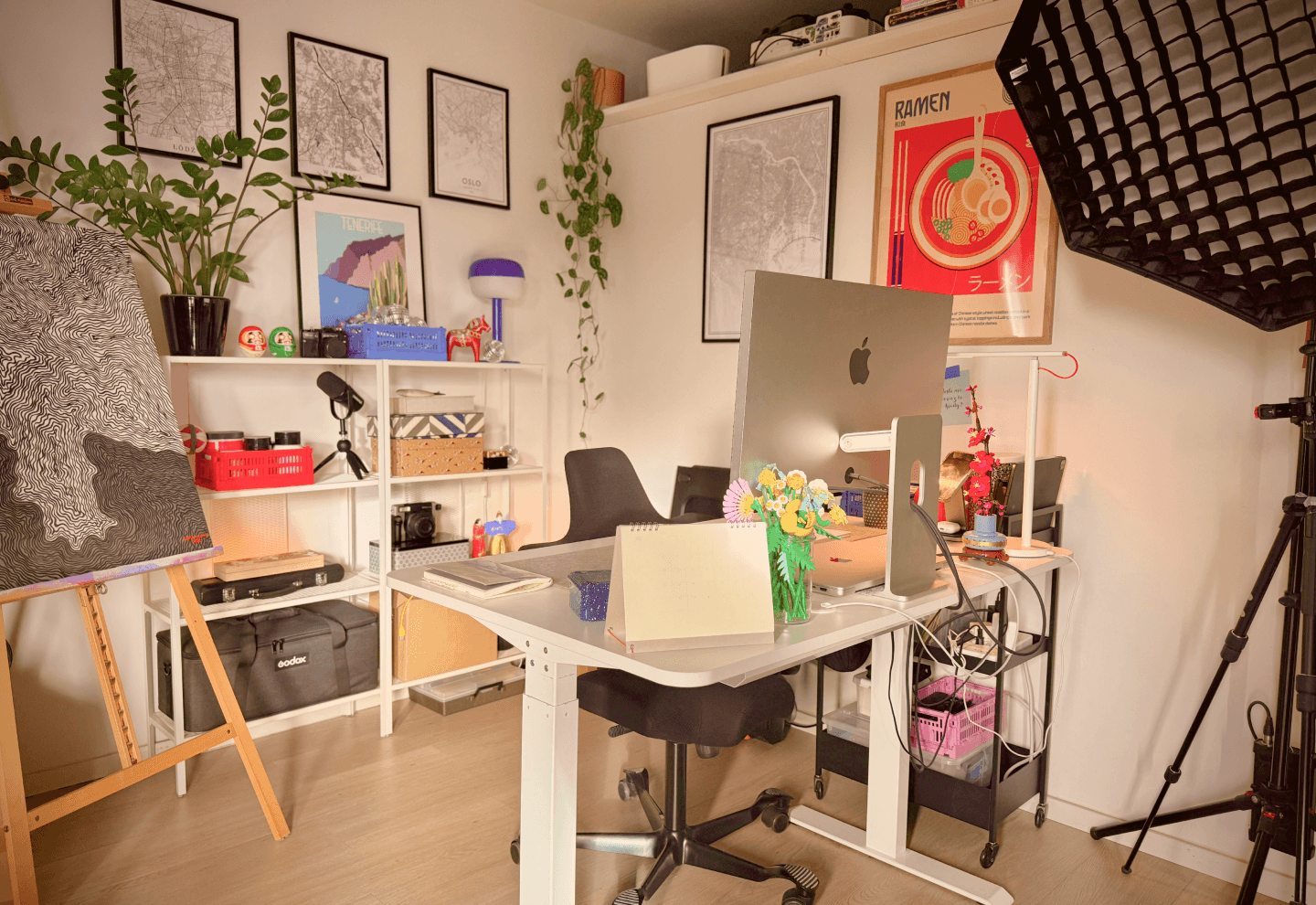
Designer Kmiecik started posting on Instagram in 2021 because LinkedIn felt “very professional” and she was “a bit too shy”. She films at home in Oslo, her dining table just off camera, lit by a Godox VL150, the lamp beloved by content creators everywhere.
“Back in 2021, 2022, you could create content that was more knowledge-oriented, guide-oriented, less storytelling-driven,” she says. “Now it's definitely more demanding. You need to be more creative.”
Her analytics bear this out: the more creatively she uses tools in her content, the more engagement she gets. People see what she has made, she says, and think, “I didn’t know you could do it with AI, and I would love to do it as well.”
The job never switches off. Kmiecik balances freelance design with influencing, shifting her focus to whichever is paying more. “It’s of course not ideal. You can’t just switch off one and turn on another. There’s a lot of overlap that then leads to burnout and overwhelm,” she says. “I am an active therapy contributor.”
Showing my face
The enthusiasm for creators feels like the final gold rush before the bots eat the internet and the lights go out. But for all the algorithm whiplash and the grind of constant work, the creators I spoke to don’t plan on stopping. And brands plan to spend more, especially on channels like YouTube, which, VEED’s Lane says, is one of the sources AI chatbots cite most. VEED’s citations in chatbot answers from creators’ videos are “growing month to month”, she says.
I’m building a company that will fight the same battle for attention as software companies. For now, I won’t be selling my creativity to them. But that didn’t stop me from taking advice from the gurus.
As we wrapped up, I asked Jarre for some suggestions to make my LinkedIn posts perform better. He told me that 20% of a post’s success is the hook and 80% is the image. His posts with selfies get far more reactions than those without, and he challenged me to post one.
I took the challenge. Sadly, the most presentable photo of myself I could find was taken months earlier, when my internet died, and I’d gone to steal the wifi from a nearby restaurant. I paired it with a gripe about the media industry, figuring the frustration, at least, was authentic.
It was my best-performing post of the month.